Case Study · Content System Build
How I built an AI-augmented content engine at SimplePractice
The editorial system I designed at SimplePractice, from pipeline architecture and contributor network to the measurement framework that tied content directly to pipeline and conversions.
- Company
- SimplePractice
- Role
- Director of Content
- Timeline
- 2022–2026
- Built by
- Jess Barron
01 · The Problem
A big audience, a small team, and no machine
When I joined SimplePractice in 2022, the content operation was producing a fraction of what the market demanded. And the audience was the hardest kind to win.
At the time, the platform served 45,000 mental health professionals: clinicians, psychiatrists, and therapists who could spot a generic health article from a mile away and click away just as fast. Winning them meant clearing a bar most content teams never have to touch. Clinical accuracy. Real editorial credibility. A voice that respected how much smarter the reader was than the average blog assumed.
And there was nothing to build on. No AI workflow. No contributor framework. No editorial standards. No system connecting a single published word to pipeline. Just a small team, a demanding audience, and a mandate to make content matter commercially. So I built the machine. And just under four years later we had over 250,000 customers.
02 · The Results
What the machine produced
Four years later, the numbers told the story better than any deck could.
- 670%
- Year-over-year organic traffic growth in 2025
- 1,200+
- Pieces published in 2025
- 4,374
- Paid customer accounts attributed to content in 2025
- 10k+
- Monthly qualified leads from content in 2025
- 75%
- AI-assisted production in 2025
Contributor totals are omitted pending Jess's confirmation. LinkedIn and Instagram follower counts are also awaiting confirmation.
03 · What it looks like in the wild
Two flagship content hubs
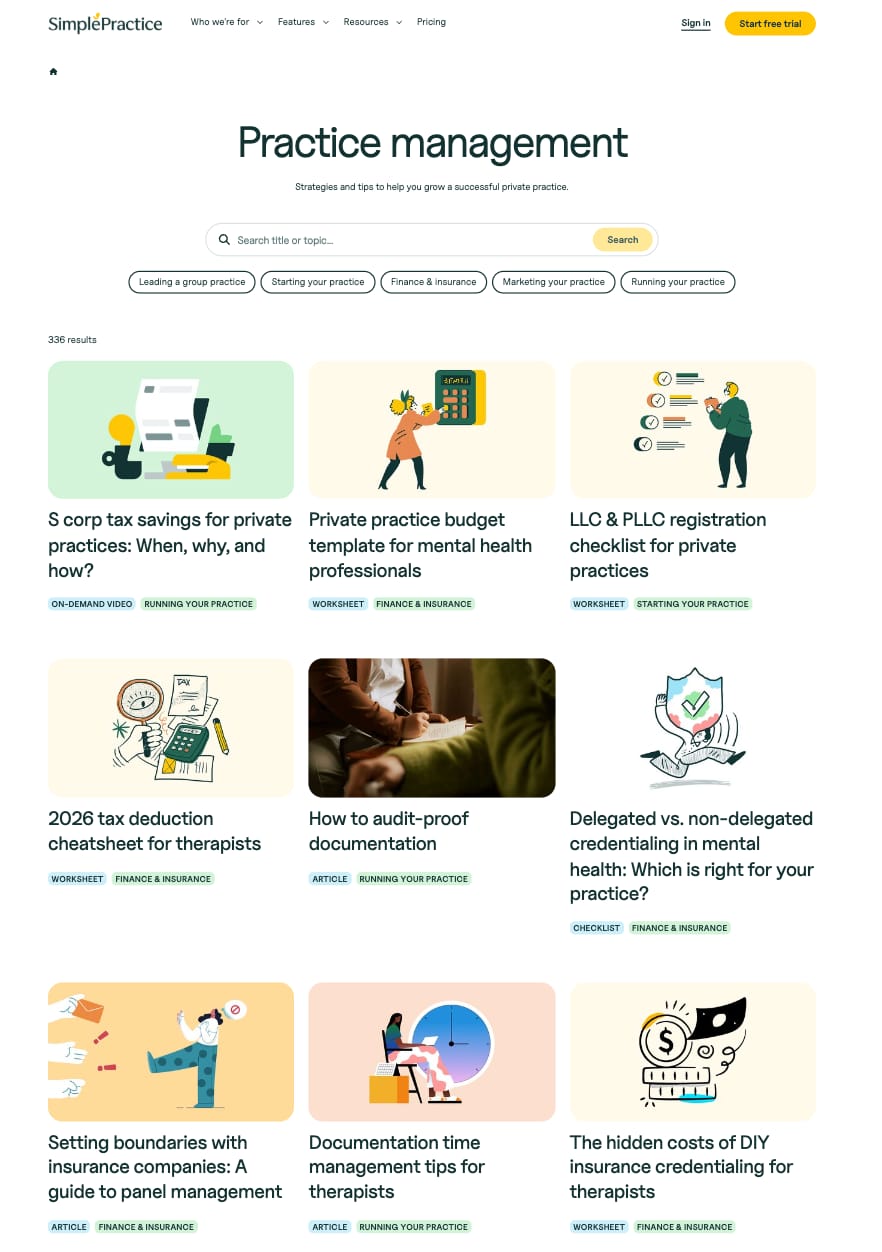
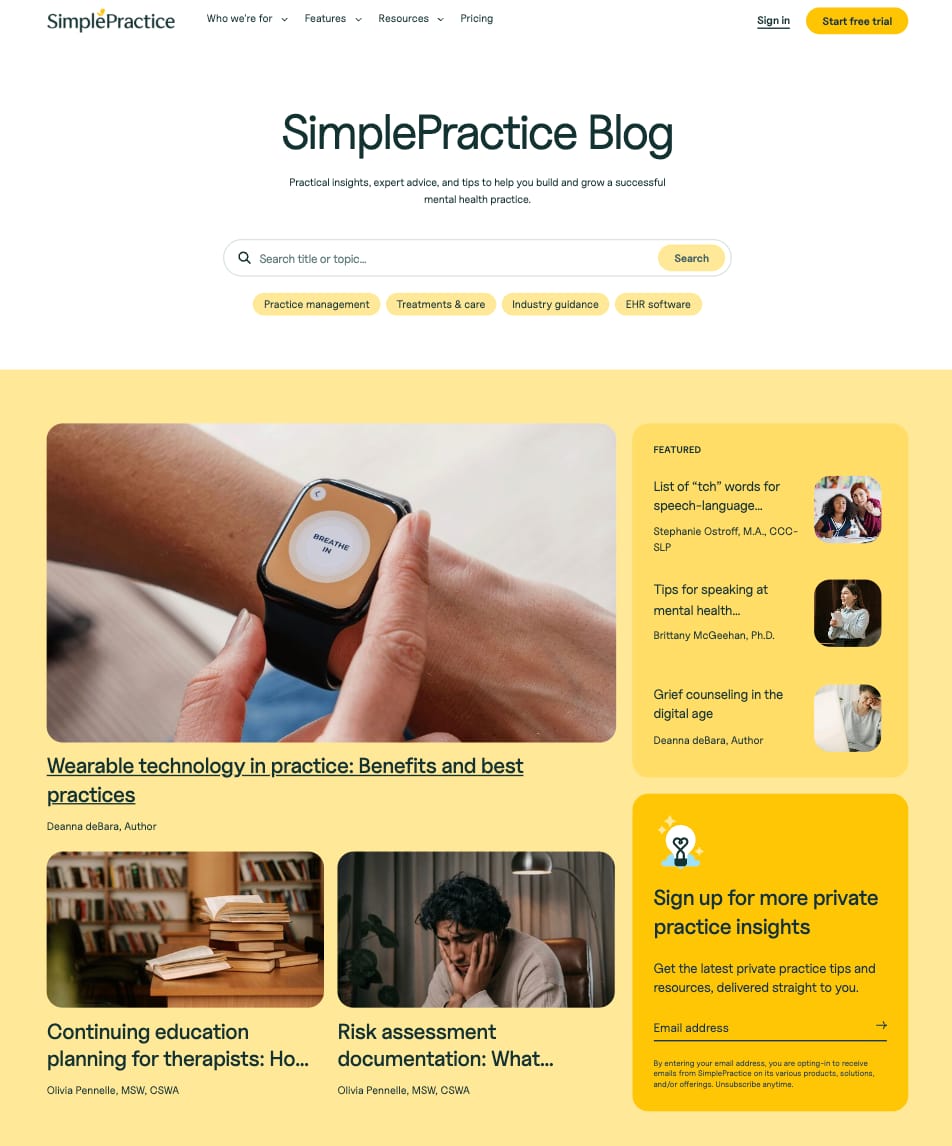
The system produced two flagship content hubs: a practice management resource library and the SimplePractice Blog, each engineered to rank, convert, and earn the trust of a clinical audience.
04 · How it actually worked
At this scale, you build a machine.
At this scale, for this audience, you can't manage content piece by piece. You build a machine that runs itself.
Clear inputs. A defined process. Quality gates that catch problems before they ship. Feedback loops that make next month's content smarter than last month's. Here's the pipeline I designed, end to end.
A tiered contributor network segmented by expertise: licensed clinicians for accuracy, SEO specialists for high-volume content, senior editors for thought leadership and executive ghostwriting. Each tier had its own brief format, rate card, revision policy, and quality rubric, plus real onboarding built on brand immersion and voice training.
The goal was never to produce more content. It was to build a system where quality and volume stopped competing.
05 · The AI Layer
AI didn't replace the work. It augmented the workflows.
By 2025, AI touched 75% of our content. But it was always a tool inside a human-built system, never a substitute for editorial judgment.
The real breakthrough was the custom Gemini Gems: AI assistants fine-tuned on SimplePractice's voice, clinical vocabulary, and audience expectations. These weren't generic prompts anyone could copy. They were trained editorial collaborators that understood the difference between how a therapist talks to a client and how a platform talks to a therapist. That distinction is one most AI content misses completely.
The payoff: a two-person in-house team that shipped like a team three times its size, without ever giving up the clinical credibility that made the content worth reading in the first place.